Light is the eyes of the audience, and each work requires its own, unique way of seeing.
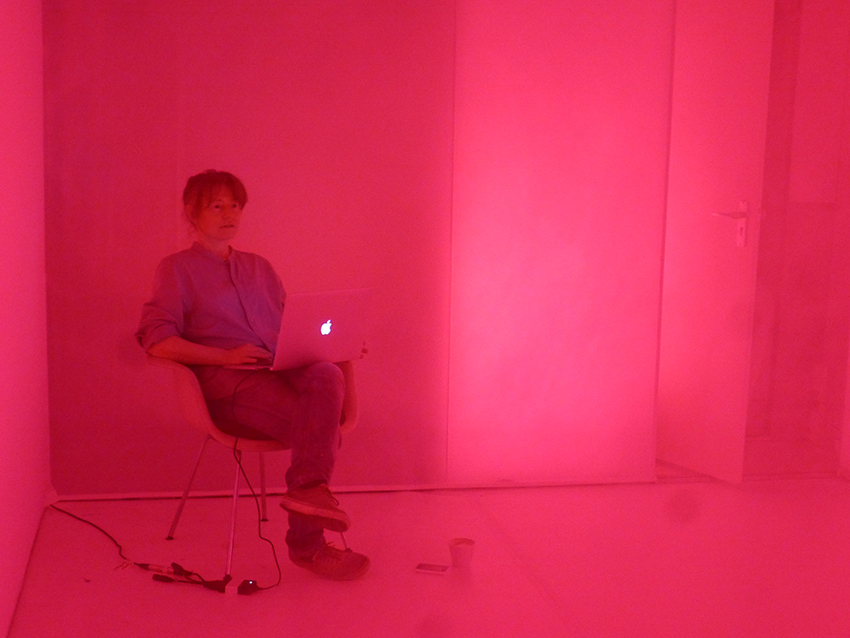
I use light to shape the relationship between the audience and space, I call my practise Sensory Scenography, exploring light as a sensory material that is experienced by the body as well as seen with the eyes. I have long been interested in how spaces and systems are organised and how they organise those who move within them. Sensory Scenography uses space as a physical thinking tool- to think through how space is organised, how this reflects and produces values, and shapes ways of seeing and being. I am currently exploring hybrid spaces with light, spaces that house many functions , that are often overlooked or made to disappear. I am curious how the embodied experience and feeling of light can facilitate attendance and attention to the spaces we inhabit. To look at what is already there and to question systemic ways of thinking and organising. To explore how light might serve as a means to communicate and collaborate across parallel systems, and softly explore other possible ways of being and doing together.
I position myself in the field of Expanded Scenography, using the lens of scenography expanded from its historical roots in theatre, to create, question, and give meaning to the experience of space. My work bases itself on the recognition that it is through the whole sensing body that we perceive, experience and are connected to the world. And the profound qualities of an embodied experience of light to communicate feeling and give meaning.
MAKER
My practise brings together work as a researcher, light designer, teacher and maker of immersive sensory installations. Through this hybrid practice, Sensory Scenography explores light as a relational, sensory material. Rather than using light to represent or illustrate a situation, I value light as a relational material- for light to be visible it always needs to be in relation to something- and I am interested in the qualities and dynamics of this relationality. I give attention to the act of perception: how it shapes both the seer and the seen, and the reciprocal relationship they share through light. I explore Sensory Scenography as a way to think through space, how it is organised, and how it organises us. And how this reflects and produces values, and shapes ways of seeing and being in daily life, and imagining possible futures. My work bases itself on the recognition that it is through the whole sensing body that we perceive, experience and are connected to the world. It aims to create space for attention and empathy in shared sensory experiences, reconnecting with the profound, embodied understanding employed in sensory perception.
BACKGROUND
Looking back I realise I have always been fascinated with light. I guess it comes from growing up in Australia, where the sun was a burning ball that blazed across the sky. Light was something that I needed to hide from, to cover up to protect myself from the damage it could inflict on an delicate white skin imported to that land. I navigated through the shadows, always needing to know where the sun was. I remember the brutal force of nature that tore across the skies of my childhood. The high contrast black shadows shrinking as the sun approached its zenith, the intensity of light bleaching the landscape of colour and detail....
I cannot imagine I would have become a light designer had I not moved to the Netherlands. Whereas the light of Australia is fierce and untameable, the soft, shifting movement of Dutch light, invited me to see other aspects of what light can do. Dutch light is a myriad of constant, illusive changes, revealing and obscuring, showing different aspects of the landscape. The light that at first appeared plain and sober, has, over time, revealed to me its layered beauty and complexity. It has taught me subtlety, and the huge impact a well-timed change can make. How a small shift in the light can change material and mood, can change colour, depth and focus. Can change the atmosphere or story of a space; how we perceive and connect to a landscape. Can change our experience of the world.
DESIGNER
I first encountered light design at het Veem Theater, a production house for contemporary Dutch mime. Mime is an innately visual theatre style, using form and images to communicate in a broader narrative structure. Not knowing the end before you begin, the work evolves through improvisation, working together on the floor, using all of the tools of theatre to create a performance, where the traditional heirachy of meaning making is flattened, and space and light can convery meaning. Within this genre, there was a lot of space for me to develop a style of light design that took as its starting point the dramaturgy of a piece and not just the visibility of the performers.
Working with the image-based, location theatre group Dogtroep was another huge influence on my work. This period broadened my vision as to what it means to work with lights - starting from observing what is already present in a location, and working in a collaborative, creative process; creating light objects and images, and working with actors to create characters and storylines developed through their interaction with light. This interactivity, creating a physical as well as dramaturgical relationship between the performers and light, remains an important part of my work.
I try to create light that is necessary; engaging in a process where through the discovery and development of a piece, I discover the form of the lights. I search for clarity of function; what is it that the light needs to do in this performance? To illuminate the journey of a piece, as opposed to illustrate it; to give light a formative role in the performance, rather than just a decorative one. For me the process of making a light design is as important as, and greatly influences, the resulting design. I aim to use light to create an environment in which the development of the concept and direction of a piece occurs hand in hand with the development of the stage and lighting concept, each element inspiring the other and working together to produced an integrated whole.
RESEARCHER and TEACHER
To further develop my artistic process I undertook a MFA Scenography at the Frank Mohr Institute in 2011. This experience refreshed my vision as a designer, enabling me to fully explore the underlying principals of design and dramatugy, and develop my ability to work artistically and conceptually with light. I undertook research which focused on the non-visual effects of light, the way light shapes our perception, and the psychological and physiological effects light can have on the mind and body. This had a profound effect on my work. I continue to learn about, question and be inspired by light and find ways to delve further into my own fascinations with it. And share these questions with current students as a core tutor at the Masters (Expanded) Scenography at HKU - University of the Arts, Utrecht.
In my work I am seeking to broaden the vision of what light can do to deepen the relationship between a performance and its audience. I believe that theatre light is made richer through harnessing all of the qualities of light, both seen and unseen, to use with dramaturgical intent. Light brings its scientific and symbolic use, as creator of life and symbol of transcendence. It brings its social functions, its ability to unite and connect us. It brings its ability to make us feel safe or threatened, to stimulate or give solace, to affect us physiologically, to harm or heal both the mind and the body. And it brings its visual beauty, its drama and chaos. My work explores how light makes us feel, and how it can create a physical or emotional space to bring the audience closer to the world of a piece.
It is the step beyond watching to experiencing that is at the core of my work. Light is more than a purely visual medium and my designs explore its ability to resonate viscerally with an audience. To touch an audience with light.